Colorado Residents Get $225 Off Any eBike!

Ather Rasool | 16 days ago

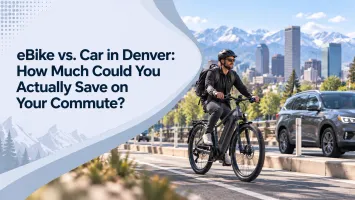
eBike vs. Car in Denver: How Much Could You Actually Save on Your Commute?

A typical car commute in Denver costs $75 to $150 a month in fuel and parking alone, before counting maintenance or depreciation. The same commute on an e-bike usually costs a few dollars a month in electricity. 

Here's the real math behind switching, based on Denver-area numbers.


Disclaimer:

This article is for general informational purposes only. Actual savings vary based on your specific commute distance, local electricity rates, parking costs, and driving habits, so treat these figures as estimates rather than guarantees.

What a Car Commute Actually Costs in Denver

Denver's average one-way commute runs about 15 miles, and the costs add up well beyond the price at the pump. A driver paying for downtown parking and putting real miles on their car every week is spending far more than the fuel receipt suggests.

Cost Category Monthly Estimate What It Covers
Fuel $75–$90 A 15-mile commute at current gas prices for an average sedan.
Parking $85+ Denver's average regular parking cost, with downtown garages often running higher.
Wear and tear $90–$160 Extra commuting miles at 15 to 25 cents per mile over a typical month.
Depreciation share Varies by vehicle Daily driving accelerates the mileage-based depreciation a car loses every year.
Insurance allocation Varies by policy The portion of your premium tied to how many miles you drive to work.

What an eBike Commute Actually Costs

An e-bike commute strips out most of these costs entirely, since there's no gas, no registration, and no parking meter to feed. The ongoing cost is small enough that most riders barely notice it on their utility bill.


Tune-Ups and Maintenance

A basic e-bike tune-up in Denver 1 runs $95 to $250 a couple of times a year, covering brakes, drivetrain, and a general safety check. This is the largest recurring cost of e-bike ownership, and it's still far less than a single month of car payments.


No Insurance or Registration Required

Colorado doesn't require insurance, registration, or a license for a compliant e-bike. That removes a recurring monthly expense that every car owner carries.


Upfront Purchase Price

A quality e-bike typically costs somewhere between $1,500 and $4,000, paid once rather than financed over years. This is the biggest cost of e-bike ownership, but it's a fraction of even a used car's price.


Colorado Incentives Lower the Starting Cost

Colorado's rebates 2 can cut hundreds off that upfront price for qualifying residents. Combined with the state's flat $225 credit, many buyers pay noticeably less than sticker price.


Electricity to Charge the Battery

Most e-bike batteries hold 0.5 to 0.7 kilowatt-hours, so a full charge costs just a few cents at Xcel Energy's residential electric rates. Charging five days a week for a month adds up to roughly a dollar or two total.


Gear and Safety Equipment

A helmet, lights, and a lock typically run $100 to $200 total as a one-time cost. This is small next to a car's ongoing insurance and fuel bills.

The Real Side-by-Side Numbers

Putting the full annual costs next to each other makes the gap clear. These figures come from current national and local data rather than rough guesses.


Annual Car Ownership Cost

AAA's 2026 Your Driving Costs study puts the average annual cost of owning and operating a new vehicle at $12,863. Even drivers with an older, paid-off car still face several thousand dollars a year in fuel, insurance, and upkeep.


Annual eBike Commuting Cost

A typical e-bike commuter spends roughly $150 to $300 a year on electricity and maintenance combined. That's before counting the one-time purchase price, which most riders keep for several years.


The Break-Even Point

Between rebates and low running costs, many riders recover their purchase price within one to two years of driving-related savings alone. Riders who were already paying for downtown parking often break even even faster.


Parking Savings Specifically

Skipping an $85-a-month parking spot alone adds up to roughly $1,000 a year in savings. E-bike parking is typically free or a small fraction of that cost.


What This Comparison Doesn't Include

This math doesn't account for weather, distance, or cargo needs that make a car necessary for some trips. It also doesn't include the value of time, since e-bikes can sometimes beat car commutes on congested routes with bike lanes.

Is Switching to an eBike Commute Worth It in Denver?

The math favors e-bike commuting most clearly for shorter, regular trips where parking or traffic is already a pain point. You can test ride a few models before deciding whether it fits your actual commute.

● Best fit:

Commutes under 10 miles each way, especially with paid parking at the destination.

● Good fit:

Mixed commutes combining an e-bike with transit for longer distances.

● Less ideal fit:

Long highway commutes or routes requiring hauling heavy cargo daily.

● Consider a backup plan:

Extreme winter weather days may still call for a car or transit.


Category Car (Annual) eBike (Annual)
Fuel or electricity $900–$1,100 $15–$25
Parking $1,000+ $0–$100
Maintenance Several hundred to $1,000+ $95–$500
Insurance and registration Required Not required
Total ownership (AAA average) $12,863 $150–$300 ongoing

Conclusion

A Denver car commute typically costs $75 to $150 a month once fuel and parking are counted, while the same trip on an e-bike often runs a few dollars a month in electricity. 


The upfront cost of an e-bike is real, but rebates and low running costs usually close that gap within a year or two for regular commuters. For short, parking-heavy commutes especially, the numbers make a strong case for at least trying the switch.

People Also Ask

How much does it cost to charge an e-bike battery in Denver?

A full charge typically costs a few cents at current Colorado electricity rates. Charging five days a week for a month usually adds up to a dollar or two total.


Is an e-bike cheaper than driving for a 10-mile commute?

Yes, in almost all cases. Fuel and parking alone for a 10-mile car commute typically cost more per month than an e-bike's entire electricity and maintenance budget.


Does an e-bike commute save money if I still own a car?

Yes, largely through reduced fuel use, parking costs, and mileage-based wear on the car. You won't eliminate car ownership costs entirely, but you'll cut the portion tied to daily commuting.


How much does Denver parking cost compared to e-bike commuting?

Denver commuters pay an estimated $85 a month on average for parking, while e-bike parking is typically free or minimal. Downtown garage parking can run significantly higher than that average.


What's the break-even time for switching a car commute to an e-bike?

Many riders recover their e-bike's purchase price within one to two years through fuel, parking, and maintenance savings. Riders who currently pay for downtown parking often break even faster.


Ather Rasool

More Posts

Colorado eBike Rebates: How Much Could You Actually Save?Colorado eBike Rebates: How Much Could You Actually Save?
Colorado eBike Rebates: How Much Could You Actually Save?

Every Colorado resident can get $225 off a qualifying e-bike automatically at checkout. Income-qualified buyers can potentially stack that into $900 or more, and in some cases over $1,500, depending on which program they use. 


Here's exactly how much each program is worth and how the programs actually work together.


Disclaimer:

This article is for general informational purposes only and reflects program details current at the time of writing. Rebate amounts, income limits, and eligibility rules can change, so confirm current details with the Colorado Energy Office or Denver's rebate program before making a purchase decision.


How Much Does an eBike Tune-Up Cost in Denver?How Much Does an eBike Tune-Up Cost in Denver?
How Much Does an eBike Tune-Up Cost in Denver?

Most eBike tune-ups in Denver run between $95 and $250, though a full overhaul or a diagnostic-heavy repair can push past $300. These are current 2026 rates for the Denver metro area, and they shift over time with parts and labor costs. 

Price comes down almost entirely to how much work the bike actually needs, not just which shop you pick.


Why Won't My eBike Turn On?Why Won't My eBike Turn On?
Why Won't My eBike Turn On?

A silent e-bike is usually not a serious problem. Most power-on issues trace back to something simple, like a loose battery or a stuck safety sensor. 


This guide walks through the most common causes, starting with the easiest fixes first.


Note: This article is for general informational purposes only. If a battery appears swollen, damaged, or shows signs of overheating, stop use immediately and seek professional inspection rather than attempting to charge or power it on.

What Happens If Your eBike Battery Dies Mid-Ride?What Happens If Your eBike Battery Dies Mid-Ride?
What Happens If Your eBike Battery Dies Mid-Ride?

A dead battery mid-ride feels alarming, but it isn't dangerous on its own. Your e-bike doesn't stop working. It just becomes a heavier version of a regular bike. 

Here's exactly what changes, what to do next, and how to avoid getting stuck far from home in Colorado's terrain.


Note: This article is for general informational purposes only. Always plan mountain and remote rides with extra caution, carry basic safety supplies, and let someone know your route before heading into areas with limited cell service.

<p>What Are the Colorado eBike Laws?</p><p>What Are the Colorado eBike Laws?</p>

What Are the Colorado eBike Laws?

Colorado treats most e-bikes like traditional bicycles, but the exact rules depend on which of three classes your e-bike falls into. State law covers speed limits, helmet requirements, and where each class can legally ride, while cities and trail managers add their own restrictions on top. 


This guide breaks down Colorado's eBike laws so you know exactly what applies before you roll out the door.

<p>What Is the Average Range of an eBike in Colorado's Mountains?</p><p>What Is the Average Range of an eBike in Colorado's Mountains?</p>

What Is the Average Range of an eBike in Colorado's Mountains?

Manufacturer range numbers rarely survive contact with Colorado's elevation. A battery rated for 60 miles on flat ground might only carry a rider 25 to 30 miles once real climbing gets involved. 


This guide breaks down what actually determines e-bike range in the mountains and what to expect on Front Range terrain.