Colorado Residents Get $225 Off Any eBike!

Ather Rasool | 17 hours ago

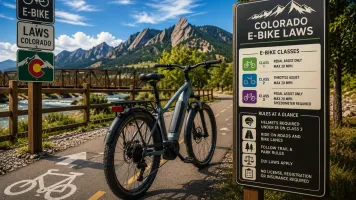
What Are the Colorado eBike Laws?

Colorado treats most e-bikes like traditional bicycles, but the exact rules depend on which of three classes your e-bike falls into. State law covers speed limits, helmet requirements, and where each class can legally ride, while cities and trail managers add their own restrictions on top. 


This guide breaks down Colorado's eBike laws so you know exactly what applies before you roll out the door.

Understanding Colorado's Three E-Bike Classes

Colorado defines e-bikes by motor behavior and top assisted speed, sorting every model into Class 1, 2, or 3. Knowing your bike's class determines where you can ride and what safety gear applies, so it's worth confirming with your retailer, like the team at Elevated E-Bikes, before you head out.


• Class 1:

Pedal assist only. The motor cuts off at 20 mph and never engages unless you're pedaling.

• Class 2:

Throttle assisted. The motor can push the bike to 20 mph without pedaling.

• Class 3:

Pedal assist only, higher ceiling. The motor cuts off at 28 mph and the bike must have a speedometer.

Where You Can Legally Ride Each Class

State law sets the baseline for where e-bikes belong, but Arvada, Denver, and other Front Range cities can tighten those rules under Colorado's electric bicycle statute on specific paths and trails. Here's how trail access typically breaks down by class.


Roads and Bike Lanes

All three classes can ride on Colorado roads and bike lanes just like a traditional bicycle. Riders still have to follow standard traffic laws, including stopping at signals and yielding right of way.


Multi-Use Paths and Trails

Class 1 and Class 2 e-bikes are generally welcome on paved multi-use paths unless local signage says otherwise. Class 3 e-bikes are usually limited to roads and bike lanes unless the local jurisdiction specifically opens the path to them.


Sidewalks

Most Colorado cities, including Denver, prohibit e-bike riding on sidewalks outside of narrow exceptions. Check posted signage before treating a sidewalk as a bike path anywhere in the metro area.


State Parks

Colorado's 42 state parks generally allow Class 1 and Class 2 e-bikes anywhere a traditional bike can go. Class 3 e-bikes are typically restricted to roads and designated bike lanes within park boundaries.


Local Trail Restrictions

Some open space areas ban e-bikes of every class outright, regardless of what's allowed on nearby paved paths. Always check trail signage or the land manager's website since rules can change from one property to the next.


Riding the Ralston Creek and Clear Creek Trails

These popular Arvada paths generally welcome Class 1 and Class 2 e-bikes at a reasonable pace. Yield to pedestrians and slower riders, especially near Old Town where foot traffic picks up.


Other Rules Every Colorado E-Bike Rider Should Know

Beyond classification and trail access, a handful of statewide rules affect age, safety gear, and legal liability. These apply no matter which city you ride in.


Age Requirements

Riders must be at least 16 to operate a Class 3 e-bike, though younger riders may ride along as a properly seated passenger. Class 1 and Class 2 e-bikes have no statewide minimum age.


Helmet Rules

Riders and passengers under 18 must wear a helmet on a Class 3 e-bike. Helmets aren't legally required on Class 1 or 2 bikes, but they're a smart habit at any speed.


No License or Registration Needed

Compliant e-bikes don't require a driver's license, registration, or plates in Colorado. Modifying a bike beyond its class limits can change that classification and trigger motor vehicle rules instead.


Insurance Isn't Mandatory, But Liability Still Applies

Colorado doesn't require e-bike insurance, but riders can still be held personally liable for causing an accident. Some homeowners or renters policies exclude e-bike incidents, so it's worth confirming your coverage.


New Labeling Requirements

Under HB 25-1197, sellers must label every e-bike with its class, top speed, motor wattage, and passenger capacity. Multi-mode e-bikes must disclose each class they're legally able to operate in.


DUI Laws Apply

Colorado treats e-bikes as vehicles under its DUI statute, so riding with a blood alcohol concentration of 0.08% or higher can lead to charges. The penalty structure mirrors what applies to drivers of standard motor vehicles.

How to Confirm Your E-Bike Is Street Legal

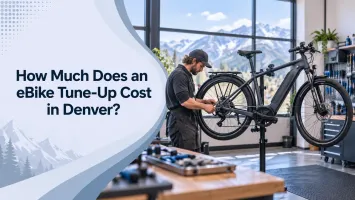
A quick check of your bike's classification label and top speed settings can save you a ticket or a denied insurance claim later. If you're not sure what class your current bike falls into, Elevated E-Bikes' service team can confirm it during a routine tune-up.

Check the label:

Every legal e-bike should carry a visible sticker listing its class, top assisted speed, and motor wattage.

Confirm throttle behavior:

A Class 1 or Class 3 bike should never move under motor power alone; if it does, it may not match its labeled class.

Watch the wattage:

Motors over 750 watts push a bike outside Colorado's e-bike definition and into moped or motorcycle territory.

Ask for documentation:

Colorado law requires sellers to provide written safety information at the point of sale, so keep a copy with your bike's paperwork.

Class Motor Assistance Top Assisted Speed Where It's Generally Allowed
Class 1 Pedal assist only 20 mph Roads, bike lanes, most multi-use paths
Class 2 Throttle assist 20 mph Roads, bike lanes, most multi-use paths
Class 3 Pedal assist only 28 mph Roads, bike lanes; paths only where locally allowed

Conclusion

Colorado's eBike laws are straightforward at the state level: three classes, clear speed caps, and no license or registration required. The real complexity comes from local trail and path rules, which is why checking signage before you ride matters as much as knowing your bike's class.

People Also Ask

Is it legal to ride an e-bike on Colorado singletrack trails?

It depends entirely on the land manager. Many open space and mountain bike specific trails ban e-bikes of every class regardless of what's allowed on paved paths nearby. Check trail signage or the managing agency's website before assuming access.


Can I convert my regular bike into a legal Class 3 e-bike?

Yes, as long as the finished bike meets Colorado's power and speed limits and carries an updated classification label. Exceeding 750 watts or a 28 mph pedal-assist cutoff pushes the bike outside e-bike rules entirely. Any change to speed or wattage legally requires a new label reflecting the change.


What happens if my e-bike doesn't have a classification label?

Missing or incorrect labeling can result in a class B traffic infraction, carrying a $15 fine plus a $6 surcharge. It can also complicate eligibility for Colorado's e-bike tax credit, which requires proof the bike meets state standards. Ask your retailer for the required label and safety documentation at purchase.


Do Colorado's e-bike laws apply to bikes bought out of state?

Yes. Colorado's classification and riding rules apply based on where you operate the bike, not where you bought it. A bike purchased elsewhere still needs to meet the state's class definitions and labeling requirements to ride legally here.


Can I ride an e-bike after dark in Colorado?

Yes, but a front light visible from a set distance is required after sunset or in low visibility conditions. Reflectors and rear lighting are strongly recommended, especially on shared paths. Riding without proper lighting after dark can result in a traffic citation.

This article is for general informational purposes only and does not constitute legal advice. Colorado e-bike laws can change and local jurisdictions may add further restrictions, so verify current rules with the Colorado General Assembly or your local municipality before riding.