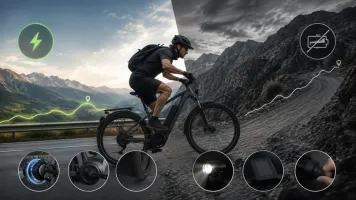
Once the power cuts out, most riders blame the motor. In reality, the extra weight of the bike itself is usually the bigger factor, since e-bike batteries and motors add real mass on top of a standard frame.
❯ The Real Reason: Weight, Not Motor Drag
E-bikes typically weigh 40 to 60 pounds more than a standard bike. That extra weight, not the motor, is what makes pedaling feel so much heavier.
❯ Hub Motors vs Mid-Drive Motors
Modern hub motors spin freely once power is gone, so they add little resistance. Mid-drive motors sit closer to the pedals and can feel slightly stiffer since they're connected right to the chain system.
❯ Flat Ground Feels Manageable
On flat pavement, most riders can pedal home without much trouble. It feels like riding a heavier bike, not a broken one.
❯ Hills Are Where You'll Feel It Most
Climbing without power turns a normal hill into a real workout, especially on grades that were already draining your battery fast to begin with, a pattern we break down in e-bike range in Colorado's mountains study.
❯ Losing Your Lights and Display
Without power, you also lose your speed readout and any battery-powered lights. Riding after dark without lights raises real legal and safety questions, which we cover in our guide to Colorado's eBike laws.
❯ Throttle-Only Riders Feel It Too
If you rely mostly on the throttle, a dead battery means you have to actually pedal for the first time in a while. Your legs will notice the change right away.