Colorado Residents Get $225 Off Any eBike!

Ather Rasool | 16 days ago

Colorado eBike Rebates: How Much Could You Actually Save?

Every Colorado resident can get $225 off a qualifying e-bike automatically at checkout. Income-qualified buyers can potentially stack that into $900 or more, and in some cases over $1,500, depending on which program they use. 


Here's exactly how much each program is worth and how the programs actually work together.


Disclaimer:

This article is for general informational purposes only and reflects program details current at the time of writing. Rebate amounts, income limits, and eligibility rules can change, so confirm current details with the Colorado Energy Office or Denver's rebate program before making a purchase decision.


The $225 State Tax Credit Available to Everyone

Every Colorado resident qualifies for this discount regardless of income, and it applies automatically at participating retailers like Elevated E-Bikes. No application or lottery is involved, which makes it the easiest savings to claim.


● Amount:

$225 off, deducted directly at checkout.

● Frequency:

Limited to one discount per resident per calendar year.

● Proof required:

A Colorado ID, utility bill, or similar document dated within three months.

● Retailer requirement:

The shop must be registered with the state to offer the discount.


Income-Qualified Programs Can Add Much More

Beyond the flat $225 credit, two separate income-qualified programs exist, and they work independently of each other rather than stacking together on the same purchase. The Colorado Energy Office manages both at the state level.


Colorado's Statewide Income-Qualified Rebate

This program offers at least $1,000 off a new e-bike for residents selected through a registration and lottery process. Registration typically opens for a short window before applicants are randomly selected and asked to verify eligibility.


Denver's City E-Bike Voucher

Denver residents who qualify by income can receive a $675 city voucher instead of the statewide rebate. Combined with the $225 state tax credit, that brings total savings up to $900 on a qualifying e-bike.


You Can't Stack Both Rebate Programs Together

The statewide income-qualified rebate and Denver's city voucher cannot both be applied to the same purchase. You can, however, combine either one with the flat $225 state tax credit.


Income Caps by Household Size

Denver's voucher uses area median income limits that scale with household size, starting around $98,100 for a single person and rising to roughly $162,600 for a household of six. Households above these limits only qualify for the standard $225 credit.


Adaptive and Cargo E-Bike Bonuses

Some programs add extra savings for adaptive e-bikes or e-cargo bikes with a documented cargo capacity. These bonuses vary by program and are worth asking about directly when you register.


How Registration and Lottery Selection Works

Both income-qualified programs use a registration window rather than first-come, first-served sign-ups. Selected applicants typically have a short window to submit proof of income and residency before their rebate expires.
What Actually Qualifies for These Discounts

Not every e-bike on the market meets the requirements for these programs. A few standards apply across both the flat credit and the income-qualified rebates.


UL Certification Required

Qualifying e-bikes must meet independent UL 2849 safety certification or the equivalent EN 15194 standard. This certification usually appears as a logo on the bike's battery.


New Bikes Only

Used or refurbished e-bikes don't qualify for any of these programs. The bike must be purchased new from a participating retailer.


Motor Wattage and Class Limits

The motor must be 750 watts or less, and the bike must fall into Class 1, 2, or 3 under Colorado's definition. Gas-powered or hybrid gas-electric bikes don't qualify.


No Off-Road-Only Modes Allowed

E-bikes with a mode exceeding the standard three-class system, sometimes marketed as an off-road setting, don't meet Colorado's qualifying definition. This applies even if the bike also has a compliant on-road mode.


Participating Retailers Only

The retailer must be registered with the state to offer these discounts. Not every bike shop in Colorado participates, so confirming ahead of time saves a wasted trip.


Proof of Colorado Residency

A driver's license, utility bill, lease agreement, or several other documents can satisfy this requirement. The document must be dated within three months of your purchase.

How to Actually Claim Your Savings

Getting the discount is straightforward once you know which program applies to you. Most riders start by confirming eligibility, then browsing qualifying e-bikes at a participating shop.


● Confirm the retailer participates:

Ask directly or check the state's participating retailer list before you shop.

● Bring proof of residency:

Have a qualifying document ready at checkout.

● Register early for income-qualified programs:

Registration windows are often short and selection is random.

● Ask about stacking:

Confirm which programs can combine before assuming your total discount.

Program Who Qualifies Typical Savings Stacks With
State Tax Credit All Colorado residents $225 Either rebate program
Statewide Income-Qualified Rebate Income-qualified, selected by lottery $1,000+ State tax credit only
Denver City Voucher Income-qualified Denver residents $675 State tax credit only

Conclusion

Every Colorado resident can count on $225 off a qualifying e-bike with no application required. Income-qualified buyers can potentially save $900 through Denver's voucher or over $1,000 through the statewide rebate, though the two rebate programs can't be combined with each other. 

Confirming your eligibility and a retailer's participation before you shop is the best way to know exactly what you'll save.


People Also Ask

Can I combine the state tax credit with Denver's e-bike rebate?

Yes, the $225 state tax credit can be combined with Denver's income-qualified city voucher. Together they can bring total savings up to $900 on a qualifying purchase.


How do I know if my e-bike qualifies for the $225 discount?

Check for UL 2849 or EN 15194 certification, usually shown as a logo on the battery. The bike must also be new, have a motor of 750 watts or less, and fall into Class 1, 2, or 3.


Is there an income limit for the $225 Colorado e-bike tax credit?

No, the flat $225 tax credit is available to every Colorado resident regardless of income. Income limits only apply to the separate rebate programs offering larger discounts.


How often does Denver release new e-bike rebate vouchers?

Denver releases vouchers in periodic rounds rather than on a fixed schedule. Once a round's vouchers are claimed, applicants are placed on a waiting list for reissued vouchers.


Does the e-bike rebate cover sales tax?

No, buyers are still responsible for paying full sales tax on the e-bike. The rebates and tax credit only reduce the bike's purchase price, not the tax owed on it.

Ather Rasool

More Posts

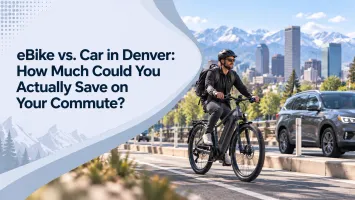
eBike vs. Car in Denver: How Much Could You Actually Save on Your Commute?eBike vs. Car in Denver: How Much Could You Actually Save on Your Commute?
eBike vs. Car in Denver: How Much Could You Actually Save on Your Commute?

A typical car commute in Denver costs $75 to $150 a month in fuel and parking alone, before counting maintenance or depreciation. The same commute on an e-bike usually costs a few dollars a month in electricity. 

Here's the real math behind switching, based on Denver-area numbers.


Disclaimer:

This article is for general informational purposes only. Actual savings vary based on your specific commute distance, local electricity rates, parking costs, and driving habits, so treat these figures as estimates rather than guarantees.

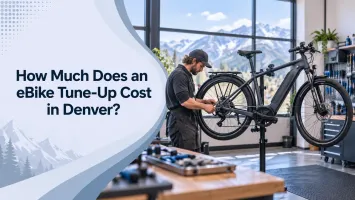
How Much Does an eBike Tune-Up Cost in Denver?How Much Does an eBike Tune-Up Cost in Denver?
How Much Does an eBike Tune-Up Cost in Denver?

Most eBike tune-ups in Denver run between $95 and $250, though a full overhaul or a diagnostic-heavy repair can push past $300. These are current 2026 rates for the Denver metro area, and they shift over time with parts and labor costs. 

Price comes down almost entirely to how much work the bike actually needs, not just which shop you pick.


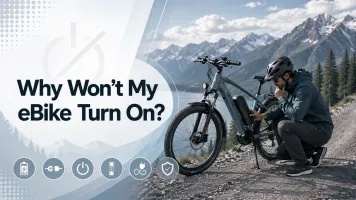
Why Won't My eBike Turn On?Why Won't My eBike Turn On?
Why Won't My eBike Turn On?

A silent e-bike is usually not a serious problem. Most power-on issues trace back to something simple, like a loose battery or a stuck safety sensor. 


This guide walks through the most common causes, starting with the easiest fixes first.


Note: This article is for general informational purposes only. If a battery appears swollen, damaged, or shows signs of overheating, stop use immediately and seek professional inspection rather than attempting to charge or power it on.

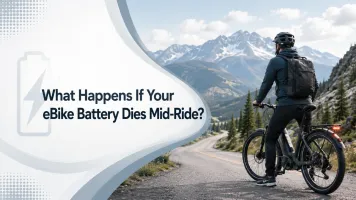
What Happens If Your eBike Battery Dies Mid-Ride?What Happens If Your eBike Battery Dies Mid-Ride?
What Happens If Your eBike Battery Dies Mid-Ride?

A dead battery mid-ride feels alarming, but it isn't dangerous on its own. Your e-bike doesn't stop working. It just becomes a heavier version of a regular bike. 

Here's exactly what changes, what to do next, and how to avoid getting stuck far from home in Colorado's terrain.


Note: This article is for general informational purposes only. Always plan mountain and remote rides with extra caution, carry basic safety supplies, and let someone know your route before heading into areas with limited cell service.

<p>What Are the Colorado eBike Laws?</p><p>What Are the Colorado eBike Laws?</p>

What Are the Colorado eBike Laws?

Colorado treats most e-bikes like traditional bicycles, but the exact rules depend on which of three classes your e-bike falls into. State law covers speed limits, helmet requirements, and where each class can legally ride, while cities and trail managers add their own restrictions on top. 


This guide breaks down Colorado's eBike laws so you know exactly what applies before you roll out the door.

<p>What Is the Average Range of an eBike in Colorado's Mountains?</p><p>What Is the Average Range of an eBike in Colorado's Mountains?</p>

What Is the Average Range of an eBike in Colorado's Mountains?

Manufacturer range numbers rarely survive contact with Colorado's elevation. A battery rated for 60 miles on flat ground might only carry a rider 25 to 30 miles once real climbing gets involved. 


This guide breaks down what actually determines e-bike range in the mountains and what to expect on Front Range terrain.